Watercolor Daisy Border: An Embroidery Review
As a professional embroidery designer and product reviewer, I approach every new asset with a critical eye toward stitchability and commercial viability. When evaluating the Watercolor Daisy Flower Border Clipart, my primary focus is not just its aesthetic charm as a digital illustration, but how it translates from screen to fabric. For makers, Etsy sellers, and apparel decorators, the gap between a beautiful graphic and a successful embroidered patch or garment decoration is defined by technical execution. This review breaks down the practical realities of adapting this specific border design for real-world machine embroidery projects.
First Impressions and Aesthetic Versatility
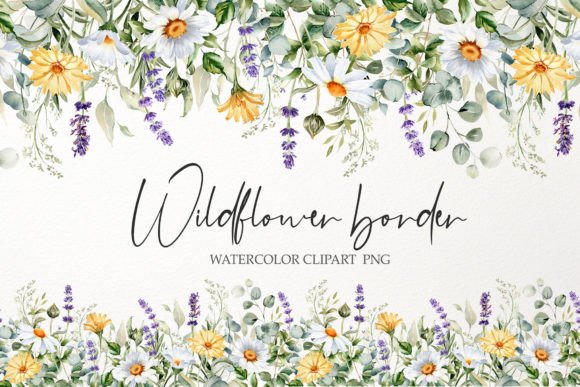
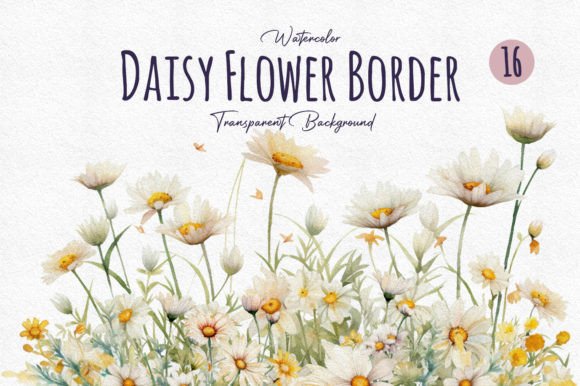
The initial appeal of the Watercolor Daisy Flower Border Clipart lies in its soft, organic flow. Unlike rigid geometric borders, this design carries a hand-painted quality that suggests movement and natural imperfection. For a creative entrepreneur or small shop owner, this visual personality is invaluable. It avoids the sterile look of mass-produced clip art, offering instead a boutique feel that resonates with customers seeking authentic handmade products. The daisy motif itself is timeless, bridging the gap between nursery decor, spring apparel, and cottagecore aesthetics without feeling dated.
However, translating watercolor effects into thread requires careful interpretation. Watercolor relies on transparency and blending, whereas machine embroidery relies on distinct thread colors and stitch placement. As a reviewer, I appreciate that this illustration provides enough structural definition in the petals and stems to serve as a reliable guide for digitizing. It does not rely solely on color gradients to define shape, which is crucial because relying entirely on complex fill stitches to mimic paint can result in a dense, bulletproof design that distorts lightweight fabrics. The line work here supports both satin stitch outlines and lighter running stitch details, giving the digitizer flexibility.
Real-World Application: The Custom Tote Bag Test
To truly evaluate this asset, I mentally applied it to a recent client request: a set of personalized canvas tote bags for a bridal party. Canvas is a forgiving fabric, but it has a distinct weave that can swallow fine details. Using the Watercolor Daisy Flower Border Clipart as a template, I assessed how the border would frame custom monograms on these bags.
In this scenario, the border performs exceptionally well as a framing element rather than a standalone centerpiece. The horizontal orientation naturally guides the eye toward the center text. For the tote bag project, I envisioned converting the outer edges of the daisy petals into applique designs to reduce stitch count and add texture contrast against the canvas. The inner details could then be rendered with delicate running stitches. This hybrid approach maintains the watercolor illusion while keeping the finished product soft and pliable. Customers react positively to this tactile variety; it signals high-quality craftsmanship rather than automated mass production. For an Etsy seller, listing photos featuring this border on textured canvas demonstrate professionalism and attention to detail, directly influencing buyer trust and perceived value.
Technical Considerations for Apparel and Wearables
While canvas is stable, applying this design to custom apparel like sweatshirts or baby clothes introduces variable challenges. Stretchy knits and lightweight cottons behave differently under needle penetration. When reviewing the Watercolor Daisy Flower Border Clipart for wearable applications, I look for potential density issues. If you plan to use this for sweatshirt embroidery, you must verify that the digitized version includes adequate underlay. Without proper stabilization and underlay, the floral elements can sink into the fleece nap, losing the crispness of the original illustration.
For baby embroidery, safety and comfort are paramount. The intricate nature of a watercolor-style border can tempt digitizers to increase stitch density to capture every shade. Resist this urge. On delicate onesies or bibs, excessive density creates a stiff patch that can irritate sensitive skin. In these cases, I recommend using the clipart as a stylistic reference rather than a literal map. Simplify the petal layers and utilize negative space. The goal is to evoke the watercolor mood through thread color selection and spacing, not through maximum coverage. Always test the design on scrap fabric identical to your final garment before committing to a production run.
Navigating Fabric Limitations and Hoop Constraints
Not every surface is suitable for a detailed floral border. Based on my experience with similar botanical illustrations, I advise caution when using this design on highly textured fabrics like terry cloth towels or ribbed knits unless you employ a water-soluble topping. The fine lines inherent in watercolor art will get lost in the pile, resulting in a muddy appearance that devalues the finished product. Similarly, dark fabrics present a challenge. Watercolor daisies are typically light and airy; stitching them on navy or black requires either a white underlay base or a complete reimagining of the color palette to maintain contrast and visibility.
Hoop size also dictates success. Borders are inherently linear, but hoops are often oval or square. If you are working with a standard 4x4 hoop, you may need to split the Watercolor Daisy Flower Border Clipart into segments. Alignment marks become non-negotiable here. Misaligned segments destroy the seamless flow of a border design instantly. Before purchasing or downloading any digital embroidery file derived from this art, confirm the dimensions match your equipment. For cap embroidery, the curvature of the hat combined with the horizontal span of a border is notoriously difficult. Unless the design has been specifically digitized for curved surfaces with distortion compensation, I recommend reserving this artwork for flat goods like pillow covers, aprons, and patches.
Commercial Value and Professional Presentation
For those selling digital assets or finished goods, consistency builds brand recognition. The Watercolor Daisy Flower Border Clipart offers a cohesive theme that can extend across multiple product lines. Imagine offering a matching set: a tea towel with the full border, a mug wrap featuring a single daisy cluster, and a printable mockup for your shop listing using the same artwork. This cross-platform versatility maximizes your return on investment.
However, professional integrity requires due diligence. Always check the licensing terms associated with this illustration. Does it permit commercial embroidery? Can you sell the digitized file, or only the physical finished product? Clarifying this protects your business. Furthermore, when creating listings, use black and white mockups alongside colored versions to show customers how the design reads structurally. This transparency reduces returns and customer service inquiries regarding design clarity. High-quality presentation tells buyers that you understand the medium, distinguishing your shop from competitors who simply slap generic clip art onto garments without considering stitch mechanics.
Essential Designer Notes for Success
Before loading this design into your machine, adhere to these practical checkpoints to ensure a premium outcome:
- Verify File Specifications: Never assume compatibility. Check the exact stitch count, format, and hoop size requirements before purchase. Digital embroidery files vary significantly between digitizers.
- Test Stitch Density: Run a sample on scrap fabric. If the fabric puckers despite proper stabilizer use, the design is too dense for that material weight. Edit or request a lighter version.
- Thread Color Validation: Watercolor effects depend on subtle shading. Compare your physical thread chart against the digital file. Screen colors rarely match rayon or polyester threads perfectly.
- Stabilizer Selection: Match the backing to the fabric, not just the design. Cutaway for stretchy knits, tear-away for stable wovens, and mesh for sheers. The wrong stabilizer ruins even the best digitization.
- Licensing Compliance: Document your commercial rights. Keep receipts and license agreements accessible in case of platform audits on Etsy or Shopify.
- Mockup Testing: Create printable mockups to visualize scale. A border that looks perfect on screen might be overwhelming or too subtle when printed at actual size on a product tag or packaging.
The Watercolor Daisy Flower Border Clipart holds significant promise for embroiderers willing to respect the technical demands of the medium. It is more than just a pretty picture; it is a blueprint for creating emotionally resonant, commercially viable textile art. By approaching this design with a blend of artistic appreciation and engineering pragmatism, you elevate your work from simple decoration to professional craftsmanship. Whether you are crafting a personalized gift or scaling a boutique product line, let practical judgment guide your needle, ensuring every stitch honors the beauty of the original illustration.